Showing posts with label Federal Reserve system. Show all posts

Thursday, October 28, 2010

Gold as Gold

If you've been around long enough to think the dollar doesn't go as far as it used to, you'd be right. I remember as a kid my parents buying a slick new Ford that cost $3,600. That same car today would cost about $30,000.

The questions are why and what does that have to do with today's woeful economy?

The answer to the first question is that a dollar now buys a sixth of what it did 40 years ago because of misguided monetary policy. So says Charles Kadlec of the American Principles Project. Up until 1971 the value of the dollar was pegged to the price of gold--a stable medium of exchange for thousands of years.

From the years immediately following World War II to the years leading up to 1971 when the U.S. cut the ties between the dollar and gold, the U.S. economy ran pretty well. During this 30-year period:
  • Employment averaged only 4.7% (for three decades) and never went higher than 7%
  • Real growth averaged 4% a year
  • Inflation, checked by low unemployment and high growth, averaged less than 2% a year
  • Interest rates were stable--moving in a 4%-6% range for 30 years
What happened in the 40 years since Pres. Nixon cut the gold cord? It hasn't been pretty:
  • Since 1972 unemployment has averaged 6.2%, a point and a half higher than the average for the previous 30 years
  • Real growth has fallen to less than 3%
  • We've had the three worse recessions since the end of World War II (in 1975, 1982 and 2008)
  • Consumer prices have risen at an astounding average of 4.4.% a year ever since the monetary swamis at the Fed replaced an ounce of gold in deciding what a dollar was worth
  • Interest rates have been extremely volatile, with corporate bonds never falling below 6% in the period, and averaging 8% during this time
Wild swings in interest rates are the canary in the coal mine of financial uncertainty. Fluctuating interest rates are a sign the economy is trying to protect itself from a series of financial problems.

The purpose of devaluing the dollar was supposed to be to help American exports. Kadlec points out that since the time Pres. Nixon pulled the plug on the gold standard the dollar has lost 75% of its value compared to the Japanese yen. Nevertheless, during that period the U.S. has compiled a massive trade deficit.

Kadlec doesn't venture a guess why the economy worked so well when the dollar was pegged to gold. But it's clear that life was a lot better before the black-cloaked wizards at the Fed started crystal balling the value of a dollar.

The15th century Spanish conquistador Hernando Cortes famously said that his fellow Spanish explorers  "suffer from a disease that only gold can cure." One could say the same thing about 21st century Americans.

Just thought you might like to know.

Saturday, September 11, 2010

9-11 Nine Years On: Who Won?

Today marks the ninth anniversary of the terrorist attacks on the United States-September 11, 2001. Today the weather in the East is much like it was that morning: cool, clear air, low humidity and not a cloud in the sky.

There will be memorials today at the sites of all the terrorist homicidal crashes. But the elephant in the room that no one will acknowledge--today or any day--is whether the terrorists were successful in their mission. We like to think they failed--that the steel and the resolve of the American people got us back up off the ground ask quickly as the twin towers in New York went down.

To answer the question of who really won you have to look at the terrorists' targets that day:
  1. The World Trade Center in New York, a symbol of America's financial muscle
  2. The Pentagon, emblematic of American military power
  3. The White House, the residence of the most powerful man on earth
  4. The Capitol, a symbol of freedom to the world
Clearly, America continues to project military strength the world over. And while we've had two spirited presidential elections and two off-year congressional elections since that day nine years ago, it's clear that our democracy continues to function vibrantly.

But what about our financial system? True, in the last nine years we've had periods of unprecedented economic growth. But we've also had the worst recession in 30 years. If you connect the dots from 9-11, this is what you have:
  • A central bank, the Fed, that flooded the market with cheap money and artificially low interest rates after 9-11 to prevent an economic collapse
  • Two rounds of tax cuts that pumped even more money into the consumer markets to restore confidence in the American economy after 9-11
  • A grandstanding Congress that got into the mortgage business and created a Fun House of low interest loans, no down payment loans, liar loans, and ultimately the sale of billions of dollars in real estate in deals that made no sense
  • An explosion in a complicated mortgage-backed securities market fueled ultimately by the Fed's cheap money policy and Congress' meddling in the mortgage market
  • An economic wild fire fueled initially by the collapse of the mortgage backed securities market but fed by the winds of panic that sucked all the liquidity out of the markets
  • Not one but two ill-advised "stimulus" plans, not to mention bank and auto industry takeovers that converted precious but dwindling liquidity into government assets through the tax system
  • A punishing recession caused by lack of liquidity and confidence
  • A timid and cautious private sector, blamed for the collapse by the government, whose Keynesian approach to the crisis further diminished consumer and business confidence
  • A crisis in confidence, credit and credibility that has lead to 10% of the American work force without jobs
So you could say that American resolve got us back on our feet after 9-11. But you could also say that the panic that 19 Islamic terrorists caused on that beautiful day in 2001 forced the American government--Democrats and Republicans--into a series of missteps: a cheap money policy that led to an explosion in mortgages that should never have been written that led to a mortgage securities market too opaque and too complex for even regulators or bond rating agencies to understand, which led to the collapse of this securities market, which led to a collapse of the West's financial system, which resulted in lack of liquidity, bankruptcies and ultimately 10% unemployment.

So maybe we didn't win after all.

Just thought you might like to know.

Tuesday, August 25, 2009

The Payoffs Continue


The Federal Reserve Bank of New York announced Monday that a New York labor boss, Denis Hughes, has been named to head the bank's board of directors. 

This is big news because among the 12 Federal Reserve banks, the New York Fed is the greatest among equals.

As John Hilsenrath blogged in yesterday's Wall Street Journal, the chairmen of the 12 Fed District Banks are supposed to have experience in banking--but not be bankers, according to the 1913 law that created the Federal Reserve System. That's a challenge. Typically the role is filled by an ex-banker or an academic with economic experience.

Fed boards are supposed to reflect the banking and community interests of their Districts. But this isn't about reflecting the community's interest. This is about reflecting the interest of Big Labor.

Big Labor put Barack Obama in the White House. The payoffs that began with a sweetheart deal for Labor on the Chrysler bailout and effective control of General Motors, continue with this little plum job.

I'm all for Fed banks reflecting the composition of their districts. But only one quarter of New Yorkers belong to labor unions. There certainly have to be more--say housewives--in New York. How about a housewife as chairman of the New York Fed?

More than two million New Yorkers receive food stamps. Why not try a food stamp recipient as New York Fed chairman?

I don't know about you, but when I go to the doctor, I'm comforted to see all of her diplomas and certificates framed on the wall. If I were in the examination room and the plumber had just finished fixing the sink, I'd be less comforted if he offered to fix my leaky heart valve while he was at it. 

Call me crazy, but I think banks should be headed up by--well, bankers. Especially the most important branch of the most important central bank in the world.

The Obama cadre can shore up its Hispanic base with a Supreme Court nomination, or preempt a rival by offering her the top State Department portfolio, but when it comes to our monetary system, let's not play politics. 

Just thought you might like to know.

Wednesday, December 3, 2008

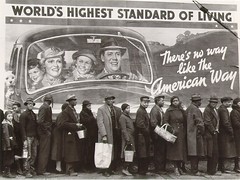
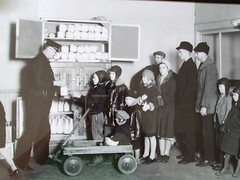
The Great Depression Revisited?

While there are some similarities to the Great Depression of the 1930s and our current economic problems, there are also some significant differences. [For a good understanding of the economic policies that contributed to and helped prolong the Great Depression, see Amity Shlaes' "The Forgotten Man," published by HarperCollins in 2007].


A previous post discussed some of the similarities. But here are some of the signal differences that make the two events quite dissimilar:

  1. Unemployment in October 1929, the start of the Depression, stood at 5%. Within five years the unemployment rate was 23.2%. A staggering 364% increase in joblessness. We've not seen anything to even suggest we're in for that kind of job loss.

  2. In October 1929, the Dow Jones Industrial Average was 343. By November 1934 it closed at 93--a long, precipitous 73% drop. Free markets will periodically reset and correct themselves. But a confluence of events during the Great Depression put the economy into a free falling death spiral from which it took years to recover.

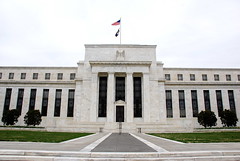
  3. In 1929 the Federal Reserve System was still in its infancy and its eventual role in managing the nation's money supply was yet to be defined. Today, the Fed has significant experience as a central bank and money manager, and has played a key role in stopping the bleeding in the current recession.

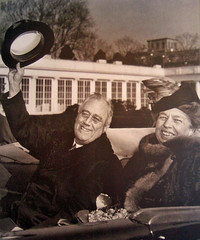
  4. The government's answer to the Great Depression was the New Deal--public policy that combined central economic planning, government largesse, and massive government public works spending. Currently, the government's response has been largely to intervene in the financial and industrial sectors but only for the purpose of maintaining the viability of those sectors as free enterprise. One of the things that helped prolong the Depression was the government's direct intervention in the industrial sector, competing for capital with private enterprise and further weakening job growth and productivity.

There are also many misconceptions that remain about the Great Depression. One is that President Herber Hoover was a laissez-faire Republican who tried nothing to slow the Depression. Although he was not the interventionist that FDR proved to be, Hoover was the consummate technocrat who believed that the federal government had a role to play assisting "Main Street." His earlier accomplishments included spearheading successful federal flood relief efforts in the South and water projects in the West. As U.S. Commerce Secretary he oversaw the expansion of the Department.

Actually, Hoover did attempt to intervene in the economy. He raised taxes and signed the disasterous Smoot-Hawley Tariff Act--both very un-Republican things to do. Raising taxes confiscated valuable capital at the time the private sector needed it most to pay bills, hire labor and invest. Smoot Hawley ignited a global trade war that closed foreign markets to U.S. manufacturers, putting yet more people out of work. But a case can be made that much of FDR's New Deal, rather than solving the Depression, actually prolonged it.


Another misconception is that World War II pulled the nation out of the Depression. Actually, two reliable economic indicators, the Dow Jones Industrial Average and the unemployment rate never returned to pre-Depression levels until 1953--20 years after the inauguration of President Roosevelt.

Just thought you might like to know.

Tuesday, December 2, 2008

The Great Depression Revisited?


There has been a lot of commentary in the news over the last several months comparing our current economic turmoil to the Great Depression of the 1930s. There are a number of similarities to the two situations. But there are also a number of significant differences.

For a terrific second look at the Great Depression you could not do better than picking up a copy of The Forgotten Man, by Amity Shlaes. Liberals today want to blame 20 years of financial deregulation (under both Democrat and Republican presidents, by the way) for our current woes. Conservatives want to blame liberal tendencies to use the free market for social engineering (think Freddie Mac and Fannie Mae).
Writing about the Depression, Shlaes says that "...neither the standard history nor the standard rebuttal entirely captures the reality of the period." The same can be said for the current recession.

Other similarities between the two periods:

  • Both were preceded by a severe downturn in the financial markets
  • The downturns in each case were preceded by several years of terrific growth--the "Roaring '20s " and the "irrational exuberance" of the early to mid part of this decade
  • Both downturns were fueled by overuse of leverage--margin trading in the 1920s and a variety of no money down mortgage products, designed to put people who might not normally qualify for loans into homes and fueled by the Federal Reserve's cheap money policy.
However, there are also a number of significant differences that make the current situation vastly different from your grandfather's Depression. But these are facts for another day.


Just thought you might like to know.